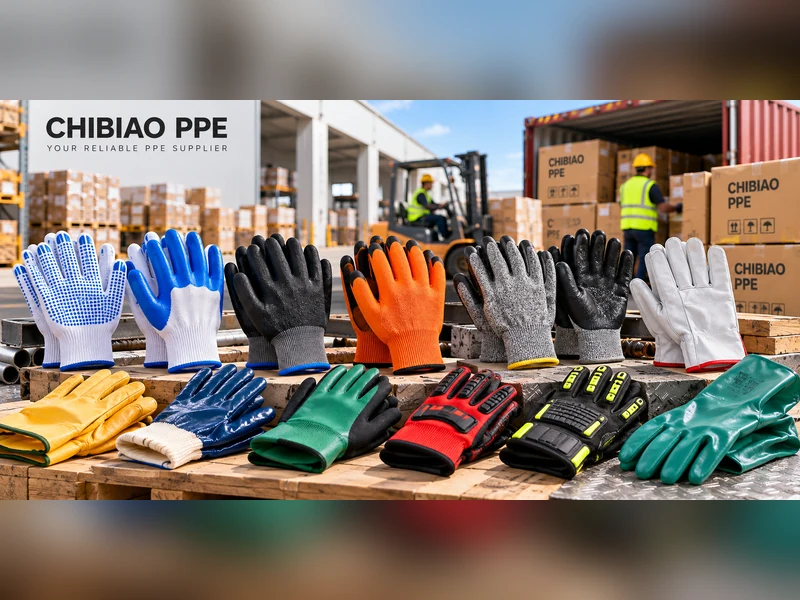
Choosing the right safety gloves is essential for protecting workers, improving workplace safety, and controlling PPE purchasing costs. Different industrial tasks involve different hazards, including abrasion, cuts, punctures, chemicals, heat, and general handling risks.
For importers, wholesalers, distributors, and industrial procurement teams, selecting safety gloves requires more than comparing prices. Buyers should evaluate the intended application, glove materials, protection requirements, sizing, quality consistency, and supplier capabilities before placing a bulk order.
This guide explains the key factors to consider when sourcing safety gloves for industrial use.
1. Identify the Intended Application
Start by identifying the tasks workers will perform and the hazards they may encounter.
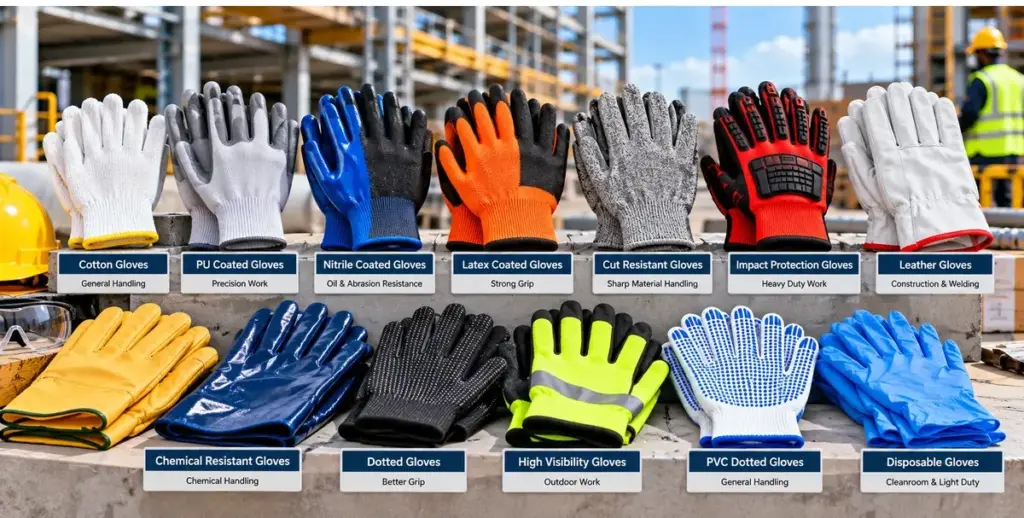
Common applications include:
- General warehouse handling and logistics
- Construction and building maintenance
- Manufacturing and assembly
- Mechanical work and equipment maintenance
- Material handling and packaging
- Cleaning and selected chemical-handling tasks
Different applications require different glove properties. A glove suitable for general handling may not provide sufficient protection against sharp edges, hazardous chemicals, or high temperatures.
Before selecting a product, define the workplace conditions and the level of protection required.
2. Choose the Right Glove Material
Safety gloves are available in different materials and constructions. Each option has its own advantages and limitations.
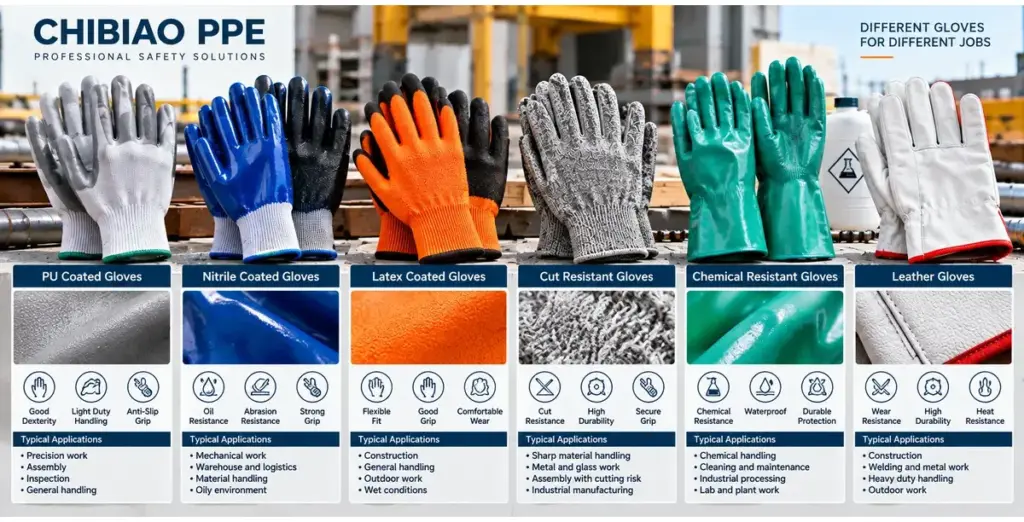
Cotton and General-Purpose Fabric Gloves
Fabric gloves are commonly used for light-duty handling, packaging, and general warehouse tasks. Their suitability depends on the material, construction, and intended application.
PU-Coated Gloves
Polyurethane-coated gloves are often selected for assembly, inspection, and precision handling where dexterity and grip are important.
Nitrile-Coated Gloves
Nitrile-coated gloves are widely used in mechanical handling, warehousing, and industrial applications where grip and abrasion resistance are needed. Actual performance depends on the coating, liner, and glove design.
Latex-Coated Gloves
Latex-coated gloves can provide a flexible fit and good grip in suitable applications. Buyers should consider latex sensitivity and evaluate whether the product is appropriate for the intended users.
Cut-Resistant Gloves
Cut-resistant gloves are designed for tasks involving sharp materials, metal edges, glass, or other cutting hazards. Buyers should verify the applicable cut-resistance classification and test documentation rather than relying on appearance alone.
Chemical-Resistant Gloves
Chemical-resistant gloves must be selected according to the specific chemical, concentration, temperature, exposure duration, and task. No single glove material is suitable for every chemical.
Always review the manufacturer’s compatibility information and product documentation before purchasing gloves for chemical handling.
3. Check the Required Protection Level
Before ordering, determine which hazards the gloves must address.
Consider the following factors:
- Abrasion resistance
- Cut resistance
- Puncture resistance
- Tear resistance
- Grip in dry, wet, or oily conditions
- Chemical compatibility, where applicable
- Heat or cold protection, where required
Applicable standards and test methods vary by market and application. For example, EN 388 is commonly used to assess mechanical risks in protective gloves, while EN ISO 374 standards address aspects of chemical and microorganism protection.
Buyers should confirm the current applicable standard, required performance level, and supporting documentation for the destination market. Do not assume that all safety gloves offer the same protection.
4. Select the Correct Size and Fit
A glove must fit the intended user properly. Gloves that are too tight can reduce comfort and dexterity, while gloves that are too loose may affect grip and handling control.
When sourcing gloves in bulk, confirm:
- Available sizes
- Size measurement method
- Fit and flexibility
- Cuff style and length
- Whether workers need to perform precision tasks
- Size distribution required for the order
For large orders, request samples where practical so that the intended users can evaluate fit and comfort before finalizing the specification.
5. Evaluate Grip, Comfort, and Durability
Protection is only one part of glove selection. Workers also need gloves suitable for repeated use and the conditions of their jobs.
Evaluate the following:
Grip: Check whether the glove provides suitable handling performance in dry, wet, or oily conditions.
Dexterity: Consider whether workers need to handle small components, tools, or packaging materials.
Comfort: Review flexibility, breathability, liner construction, and cuff design.
Durability: Evaluate coating adhesion, seam quality, abrasion performance, and consistency between production batches.
Maintenance and replacement: Determine whether the gloves are intended for single use or repeated use, and establish appropriate inspection and replacement procedures.
The lowest unit price does not always represent the lowest overall purchasing cost. Product suitability, service life, worker acceptance, and replacement frequency should also be considered.
6. Confirm Quality and Compliance Documentation
For importers and distributors, consistent product quality is essential.
Before placing a bulk order, request and review relevant documents, which may include:
- Product specifications
- Material and construction details
- Applicable test reports
- Declarations or certificates required for the target market
- Product labeling and packaging information
- Batch identification and quality inspection records, where available
Requirements depend on the product, intended use, and destination market. Buyers should verify the authenticity, scope, and validity of relevant documentation.
Do not rely solely on a supplier’s general statement that a product is “certified.” Confirm that the documentation applies to the exact product model and protection claims being purchased.
7. Plan Your Bulk Purchasing Requirements
Before requesting a quotation, prepare a clear purchasing specification.
Include:
- Glove type and intended application
- Required material and coating
- Protection level and applicable standards
- Sizes and quantity per size
- Color and product design
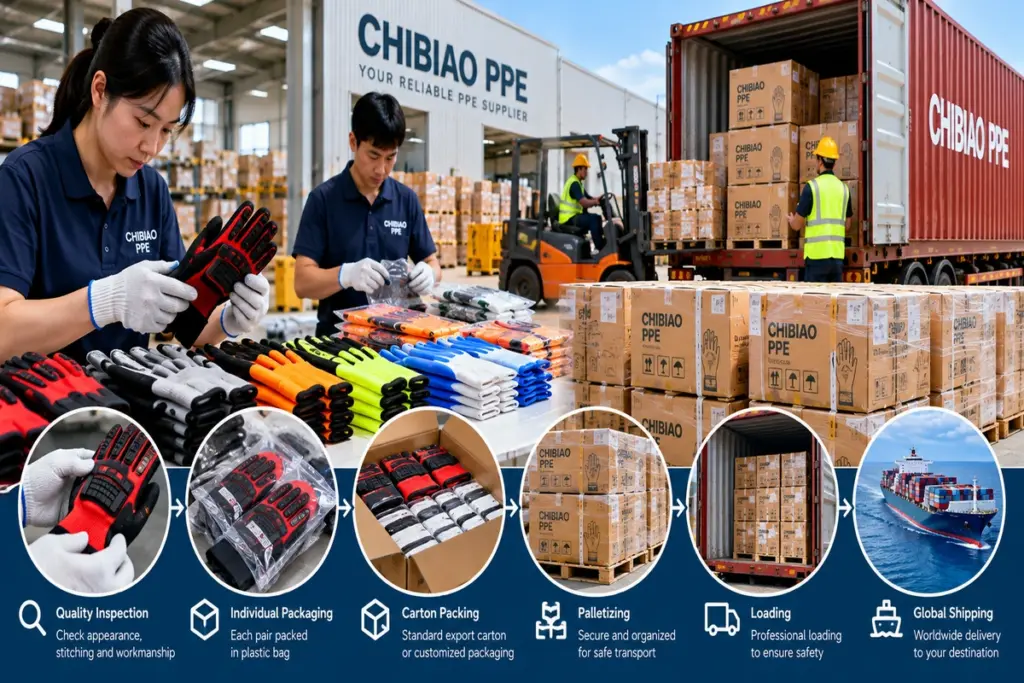
- Packaging requirements
- Logo or private-label requirements
- Destination market
- Required delivery schedule
- Inspection and documentation requirements
Also confirm the minimum order quantity, sample availability, production lead time, payment terms, shipping arrangements, and quotation validity.
Providing complete specifications helps suppliers quote accurately and reduces the risk of misunderstandings during production.
8. Evaluate the Supplier
A reliable safety glove supplier should be able to explain product differences and provide information relevant to your application.
When comparing suppliers, consider:
- Product range and specification clarity
- Ability to provide samples
- Consistency of product quality
- Availability of relevant technical documents
- Packaging and private-label capabilities
- Communication and order coordination
- Production planning and delivery reliability
For distributors and wholesalers, it is also useful to discuss repeat-order consistency and how product specifications will be maintained across future shipments.
9. Safety Gloves Bulk Order Checklist
Use this checklist before confirming your purchase:
- Intended application and hazards identified
- Glove material and construction confirmed
- Required protection level specified
- Applicable standards and documentation reviewed
- Sizes and quantities confirmed
- Samples evaluated, where appropriate
- Packaging and labeling requirements agreed
- Logo or OEM requirements confirmed
- Unit price, MOQ, and payment terms reviewed
- Production and delivery schedule confirmed
- Quality inspection requirements agreed
- Shipping and export documentation clarified
Conclusion
Choosing the right industrial safety gloves requires a clear understanding of workplace hazards, material performance, protection requirements, fit, quality, and purchasing conditions.
For importers, wholesalers, distributors, and industrial buyers, a well-defined specification makes it easier to comp