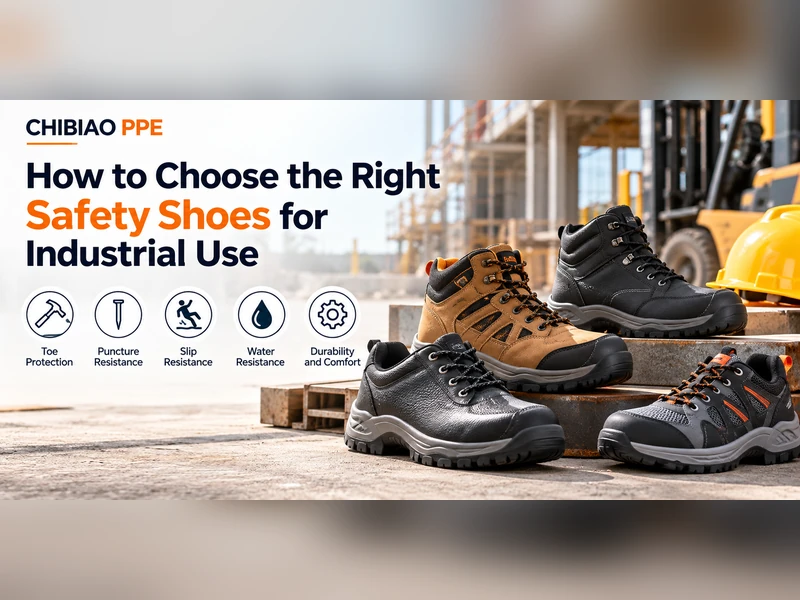
Choosing the right safety shoes is essential for protecting workers, improving workplace comfort, and supporting compliance with job-specific safety requirements. For PPE importers, wholesalers, distributors, and industrial suppliers, understanding the differences between safety footwear types helps make better purchasing decisions and reduces the risk of selecting unsuitable products.
This guide explains the key factors to consider when sourcing safety shoes for industrial applications.
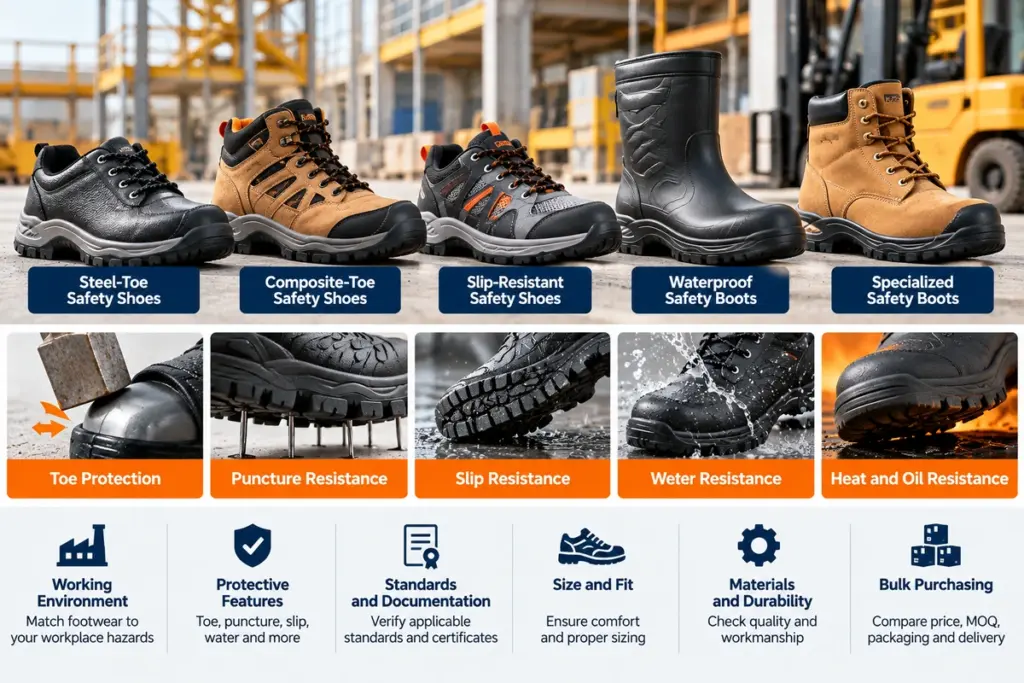
1. Identify the Working Environment
Start by identifying where and how the footwear will be used. Different workplaces present different hazards.
- Construction sites: Footwear may need toe protection, slip resistance, and resistance to penetration from sharp objects.
- Factories and workshops: Consider the risks associated with heavy objects, machinery, slippery floors, and prolonged standing.
- Warehouses and logistics: Grip, comfort, durability, and suitability for extended walking are important.
- Outdoor work: Depending on the environment, water resistance, weather protection, and outsole performance may be relevant.
- Electrical or specialized environments: Confirm the exact electrical hazards and required footwear properties before selecting a suitable model.
The correct footwear should be selected according to a documented risk assessment, not appearance or price alone.
2. Understand the Main Types of Safety Footwear
Safety footwear is available in several designs. The most suitable option depends on the work being performed and the protection required.
Steel-Toe Safety Shoes
Steel-toe footwear uses a steel protective toe cap designed to help protect against specified impact and compression hazards. It may be suitable for construction, manufacturing, warehousing, and other industrial applications where these hazards are present.
Composite-Toe Safety Shoes
Composite-toe footwear uses non-metallic protective materials. Depending on the model, it may be suitable for workplaces where non-metallic footwear is preferred. Buyers should verify the product’s tested protective performance rather than assuming that all composite-toe shoes offer identical protection.
Slip-Resistant Safety Shoes
Slip-resistant footwear is designed to improve traction on specified surfaces and under defined test conditions. Buyers should consider the actual workplace floor, including whether it may be wet, oily, dusty, or contaminated.
Waterproof or Water-Resistant Safety Footwear
For outdoor work or wet environments, buyers may need footwear with verified water-resistant or waterproof properties. These terms are not interchangeable, so the exact performance claim should be confirmed with the supplier.
Specialized Safety Footwear
Some jobs require additional properties, such as resistance to specific chemicals, heat, or electrical hazards. These characteristics must be verified against the relevant product documentation and the workplace risk assessment.
3. Check the Required Protective Features
Before selecting a model, identify the hazards the footwear must address.
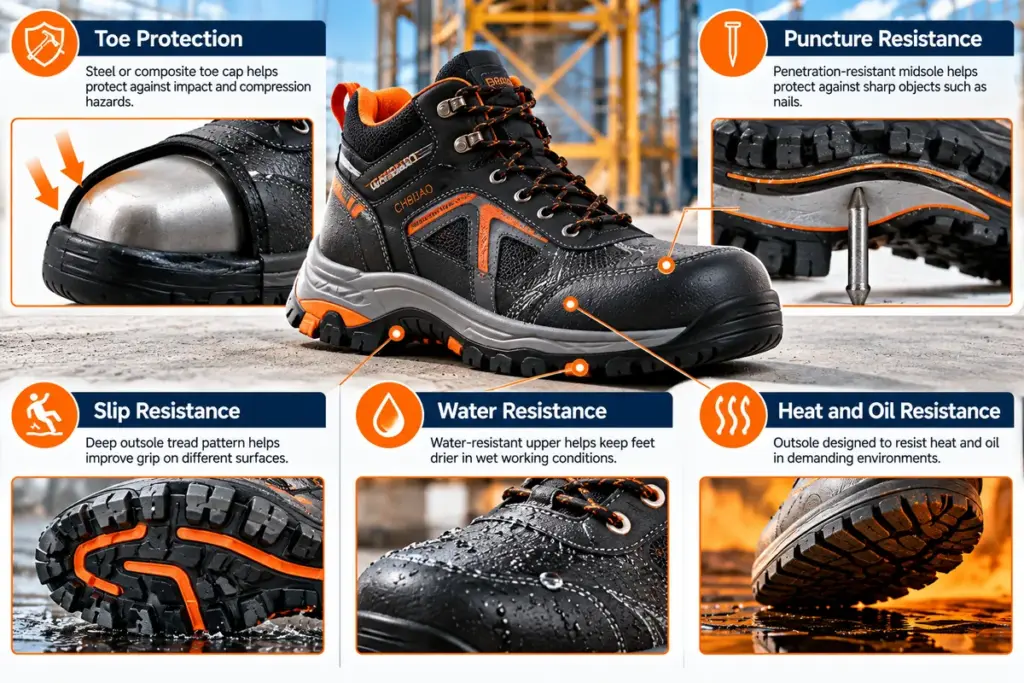
- Toe protection: Confirm the required impact and compression protection.
- Penetration resistance: Determine whether the sole construction needs protection against nails or other sharp objects.
- Slip resistance: Check suitability for the actual floor conditions.
- Water resistance: Confirm whether the job requires water-resistant or waterproof footwear.
- Heat and oil resistance: Verify outsole properties against the intended operating conditions.
- Electrical properties: Confirm the specific requirement. Antistatic, electrically insulating, and other electrical footwear properties are different and should not be treated as interchangeable.
- Chemical resistance: Verify resistance to the specific chemicals involved rather than relying on a general claim.
Not every worker needs every feature. Selecting footwear based on the actual hazards helps buyers avoid both inadequate protection and unnecessary specifications.
4. Verify Standards and Product Documentation
Safety footwear requirements vary by market and application. EN ISO 20345 is a commonly referenced European standard for safety footwear. Other markets may apply different regulations or standards.
Before purchasing, confirm:
- The applicable standard and edition.
- The product’s declared protection category and performance claims.
- Relevant test reports, certificates, or declarations required for the destination market.
- The manufacturer’s model number and product identification.
- Whether the documentation matches the exact footwear model being offered.
Do not assume that a supplier’s general certificate covers every product in its range. Verify the scope, validity, issuing body, and model details of the relevant documents.
5. Select the Correct Size and Fit
Even footwear with appropriate protective features may be unsuitable if the fit is poor.
Consider the following when evaluating samples:
- Available size range and sizing system.
- Toe-box space and heel stability.
- Fit when worn with the socks used at work.
- Comfort during standing, walking, and bending.
- Weight and flexibility appropriate to the job.
- Ease of putting on and removing the footwear.
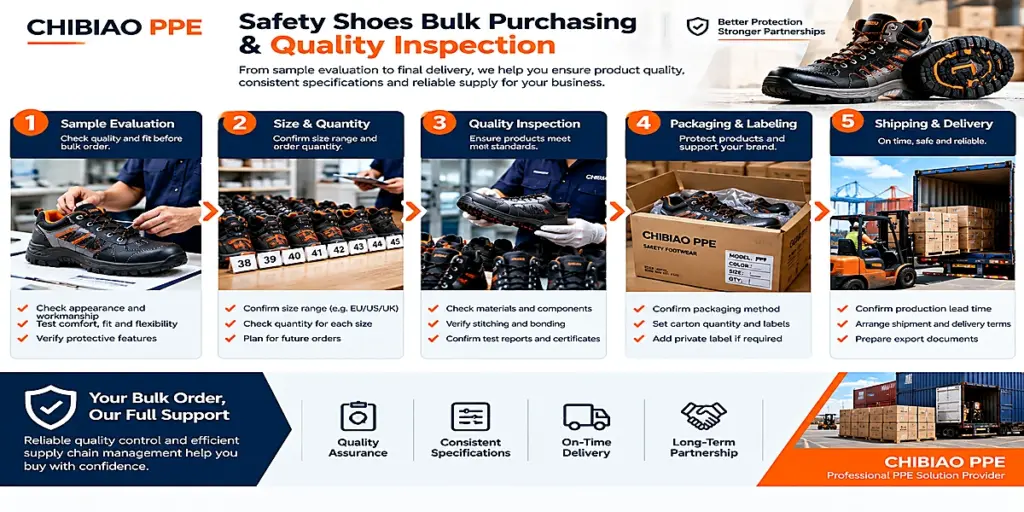
For bulk orders, confirm the size distribution before production or shipment. If possible, evaluate samples across the key sizes rather than relying on a single sample.
6. Evaluate Materials, Outsoles, and Durability
Material selection affects comfort, maintenance, durability, and suitability for the work environment.
Buyers should review the upper material, lining, insole, protective toe cap, and outsole construction. Ask suppliers to clarify the material specifications and the conditions for which the footwear is intended.
When evaluating samples, check stitching, bonding, sole attachment, finishing, and overall workmanship. For repeated bulk orders, agree on the specifications that must remain consistent between batches.
Avoid relying on general descriptions such as “heavy-duty” or “premium quality” without clear product specifications or supporting evidence.
7. Compare Price and Total Purchasing Cost
The lowest unit price does not necessarily represent the best purchasing value. Importers and distributors should compare products with equivalent protective features, specifications, documentation, and packaging.
Include the following in your evaluation:
- Unit price and minimum order quantity (MOQ).
- Sample and testing costs, where applicable.
- Packaging, labeling, and private-label requirements.
- Production lead time and order quantity.
- Freight, insurance, duties, and other applicable import costs.
- Inspection requirements and arrangements for non-conforming products.
For an accurate comparison, request quotations based on the same specification and delivery terms.
8. Evaluate the Supplier
A reliable supplier should be able to explain product specifications, provide relevant supporting documents, communicate clearly, and confirm realistic production and delivery arrangements.
Before placing a bulk order, consider whether the supplier can:
- Provide clear model-specific specifications.
- Supply samples for evaluation.
- Share relevant test documentation.
- Confirm production capacity and lead time.
- Support agreed packaging and labeling requirements.
- Maintain consistent product specifications for repeat orders.
- Confirm its legal business details and payment information.
For new suppliers, verify the business identity and payment instructions independently before transferring funds.
9. Practical Bulk-Purchasing Checklist
Use this checklist before confirming a safety footwear order.
- Application: Identify the workplace, tasks, and hazards.
- Footwear Type: Confirm the required design and protective features.
- Standards: Verify applicable standards and destination-market requirements.
- Documentation: Check model-specific specifications and supporting test documents.
- Sizing: Confirm the size range and quantities required for each size.
- Samples: Evaluate fit, comfort, grip, and workmanship where appropriate.
- Specifications: Record the agreed materials, outsole, protective components, and performance claims.
- Quotation: Confirm unit price, MOQ, currency, and additional charges.
- Packaging: Specify individual packaging, carton quantities, labels, and private-label requirements.
- Delivery: Confirm lead time, shipment schedule, and agreed delivery terms.
- Inspection: Agree on quality criteria and how non-conforming goods will be handled.
- Payment: Verify supplier details, payment terms, and the Proforma Invoice (PI).
- Repeat Orders: Establish how specifications and quality consistency will be maintained.
Completing this checklist helps reduce misunderstandings and supports more consistent bulk procurement.
Conclusion
Choosing the right industrial safety shoes requires more than comparing prices or selecting a popular style. Buyers should assess workplace hazards, verify protective performance, check product documentation, evaluate fit and durability, and confirm supplier reliability.
For PPE importers, wholesalers, and distributors, a clear purchasing specification is an important step toward safer product selection and more predictable bulk orders.
Looking for industrial safety footwear for your market? Contact CHIBIAO PPE to discuss your product specifications, sizing requirements, packaging options, and bulk purchasing needs.