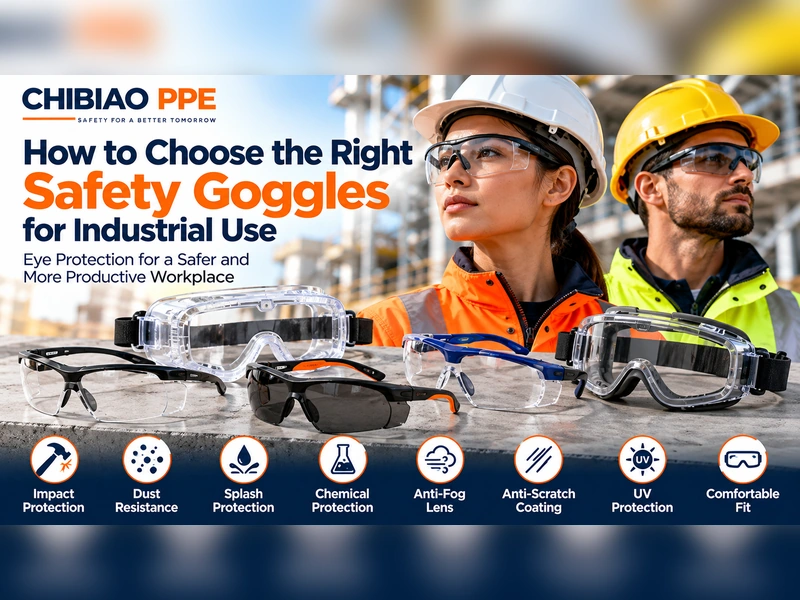
Choosing the right protective eyewear is an important part of workplace safety. Industrial environments may expose workers to flying particles, dust, liquid splashes, and other eye hazards. For PPE importers, wholesalers, distributors, and industrial suppliers, understanding the differences between safety glasses and safety goggles helps ensure that the products they source match the intended application.
This guide explains the key factors to consider when selecting industrial eye protection for bulk purchasing.
1. Identify the Eye Hazards
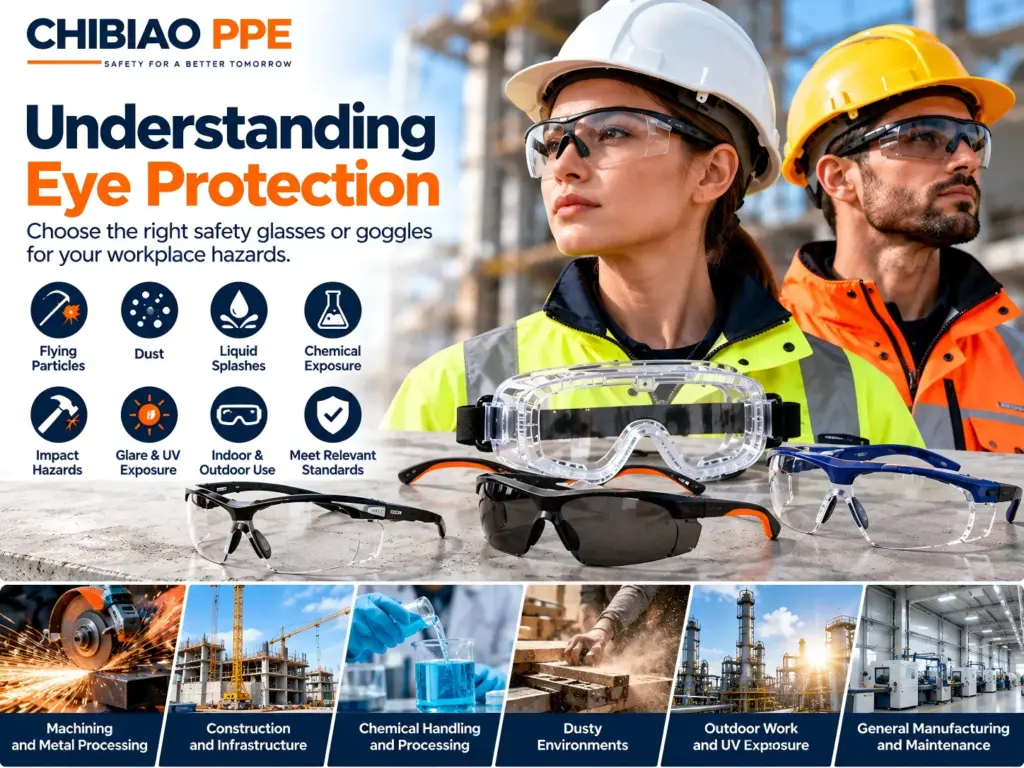
Start by identifying the hazards workers may encounter in their daily tasks. Different hazards require different types of eye protection.
- Flying particles: Grinding, drilling, cutting, and machining may create particles that can strike the eyes.
- Dust and airborne debris: Some manufacturing, construction, and material-handling tasks require protection against dust and particles.
- Liquid splashes: Cleaning, processing, and certain industrial operations may expose workers to splashes.
- Chemical exposure: Where chemicals may contact the eyes, select eyewear specifically suitable for the chemical and task.
- Impact hazards: Confirm the required impact protection based on the work being performed.
- Outdoor glare and light exposure: Some applications may require suitable tinted lenses or specialized optical protection.
A product designed for one hazard should not automatically be assumed suitable for another. Begin with a workplace risk assessment and identify the required level of protection.
2. Understand the Difference Between Safety Glasses and Safety Goggles
Safety glasses and safety goggles serve different purposes and should be selected according to the workplace hazards.
Safety Glasses
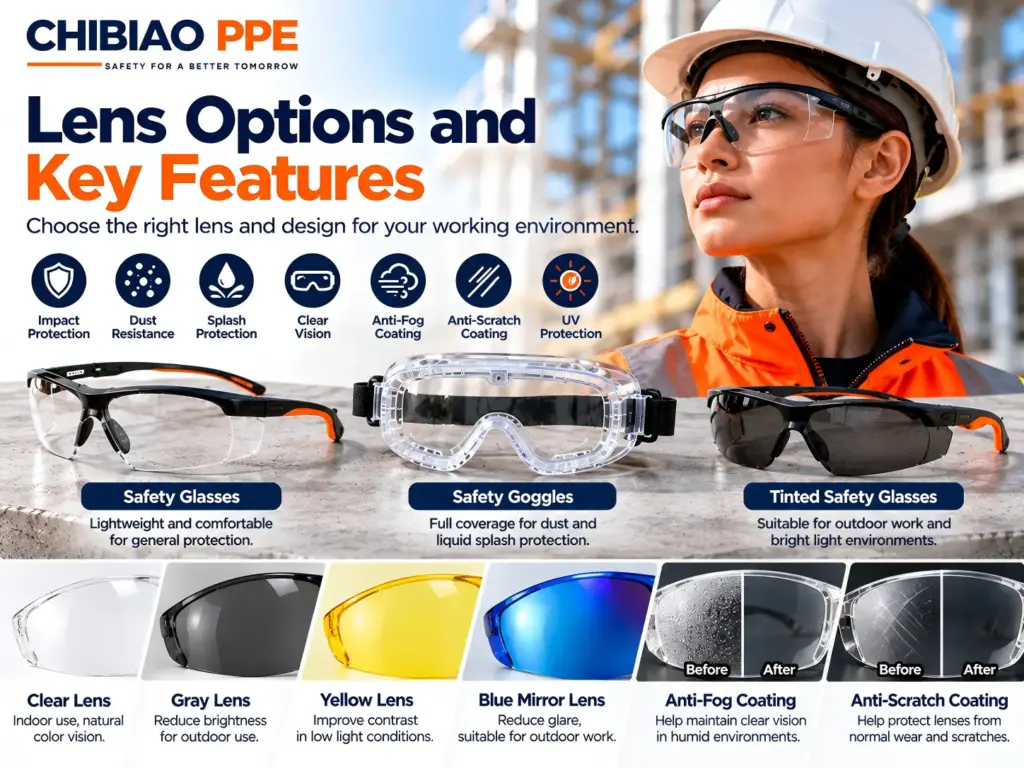
Safety glasses typically feature protective lenses with frames or side protection. They may be suitable for tasks where impact protection is required and the design provides the necessary coverage.
When evaluating safety glasses, consider lens coverage, side protection, fit, visibility, and compatibility with other personal protective equipment.
Safety Goggles
Safety goggles generally fit more closely around the eyes and may provide greater coverage against dust or liquid splashes, depending on their design.
Buyers should evaluate the sealing design, ventilation, lens clarity, fit, and compatibility with respirators, helmets, and other PPE.
Over-the-Glasses Goggles
Some designs are intended to be worn over prescription glasses. Confirm the internal dimensions, comfort, field of vision, and compatibility with the user’s existing eyewear before ordering in bulk.
Neither safety glasses nor goggles should be selected by appearance alone. Verify that the exact product is suitable for the intended hazards and meets the applicable requirements.
3. Choose the Right Lens Material and Design
Lens material and construction influence impact performance, weight, optical clarity, and comfort.
Polycarbonate Lenses
Polycarbonate is commonly used for protective eyewear because it can provide impact-resistant properties when the finished product is appropriately designed and tested. Buyers should verify the performance of the complete eyewear product rather than relying on the material name alone.
Clear Lenses
Clear lenses are commonly used for indoor environments where maintaining natural color perception and visibility is important.
Tinted Lenses
Tinted lenses may be suitable for certain outdoor or bright-light environments. The tint should match the application, and ordinary tinted lenses should not be assumed to provide certified protection against welding radiation or other specialized optical hazards.
Lens Coatings
Depending on the product, coatings may include anti-scratch or anti-fog features. Buyers should confirm the coating type, its intended benefits, and any care or cleaning limitations.
When comparing models, consider optical clarity, distortion, field of vision, lens replacement options, and the conditions under which the eyewear will be used.
4. Evaluate Coverage, Fit, and Comfort
Protective eyewear must fit properly to provide its intended coverage and remain comfortable during use.
Check the following features:
- Eye coverage: Confirm that the design provides suitable coverage for the identified hazards.
- Frame fit: Review the bridge, temples, strap, and contact points.
- Adjustability: Determine whether the design allows useful adjustments for different users.
- Ventilation: For goggles, assess ventilation design and its suitability for the task.
- Field of vision: Ensure the product does not unnecessarily restrict visibility.
- Comfort: Evaluate weight, pressure points, and suitability for extended wear.
- PPE compatibility: Check compatibility with hard hats, hearing protection, respirators, and other equipment.
Where possible, evaluate samples with the other PPE that workers will wear at the same time.
5. Understand Anti-Fog and Anti-Scratch Features
Fogging can affect visibility, especially in humid environments, during temperature changes, or when workers wear respiratory protection. Anti-fog features may help, but their effectiveness depends on the product design, coating, conditions, and maintenance.
Anti-scratch coatings may help protect lens surfaces during normal use, but they do not make lenses scratch-proof.
Before bulk purchasing, clarify:
- Whether anti-fog or anti-scratch treatment is included.
- Whether the coating has supporting product documentation.
- The recommended cleaning method.
- Whether cleaning agents may damage the lens or coating.
- The expected replacement and maintenance requirements.
Do not assume that all lenses with similar appearances provide the same performance.
6. Verify Applicable Standards and Documentation
Protective eyewear requirements depend on the destination market and the intended application.
EN ISO 16321 is a relevant international series for eye and face protection in occupational use. ANSI/ISEA Z87.1 is also commonly referenced for occupational and educational eye and face protection in the United States. Buyers should confirm the applicable edition and requirements for their market.
Before purchasing, verify:
- The applicable standard and edition.
- The exact model and declared protection features.
- Relevant test reports, certificates, or declarations where required.
- Product markings and identification.
- Whether the supporting documentation covers the specific product being offered.
Do not assume that every product from a supplier has the same certification or performance level. Verify the scope of the documentation and confirm that it matches the model and intended use.
7. Consider Cleaning, Maintenance, and Replacement
Protective eyewear needs appropriate care to remain usable and provide its intended performance.
Before selecting a product, ask the supplier about:
- Recommended cleaning procedures.
- Compatible cleaning agents.
- Storage requirements.
- Lens replacement options, where applicable.
- Inspection criteria for scratched, damaged, or degraded eyewear.
- Replacement intervals based on workplace policy and product instructions.
Damaged or badly scratched eyewear may impair visibility and should be assessed according to the manufacturer’s instructions and workplace safety procedures.
8. Compare Price and Total Purchasing Cost
For importers and distributors, unit price is only one part of the purchasing decision. Compare products with equivalent specifications, protection requirements, packaging, and delivery terms.
Include the following in your evaluation:
- Unit price and minimum order quantity (MOQ).
- Sample and testing costs, where applicable.
- Lens options and coating specifications.
- Individual packaging and carton quantities.
- Logo, labeling, and private-label requirements.
- Freight, insurance, duties, and other applicable import costs.
- Inspection arrangements and procedures for non-conforming products.
Request quotations based on the same product requirements to make supplier comparisons more meaningful.
9. Evaluate the Supplier
A dependable PPE supplier should provide clear specifications, relevant product documentation, realistic lead times, and consistent communication.
Before placing a bulk order, consider whether the supplier can:
- Explain the differences between its eyewear models.
- Provide samples for evaluation.
- Supply model-specific specifications and supporting documents.
- Confirm available lens types and coatings.
- Support agreed packaging and labeling requirements.
- Explain quality inspection procedures.
- Maintain consistent specifications for repeat orders.
- Verify its legal business details and payment information.
For new suppliers, independently verify business identity and payment instructions before transferring funds.
10. Practical Bulk-Purchasing Checklist
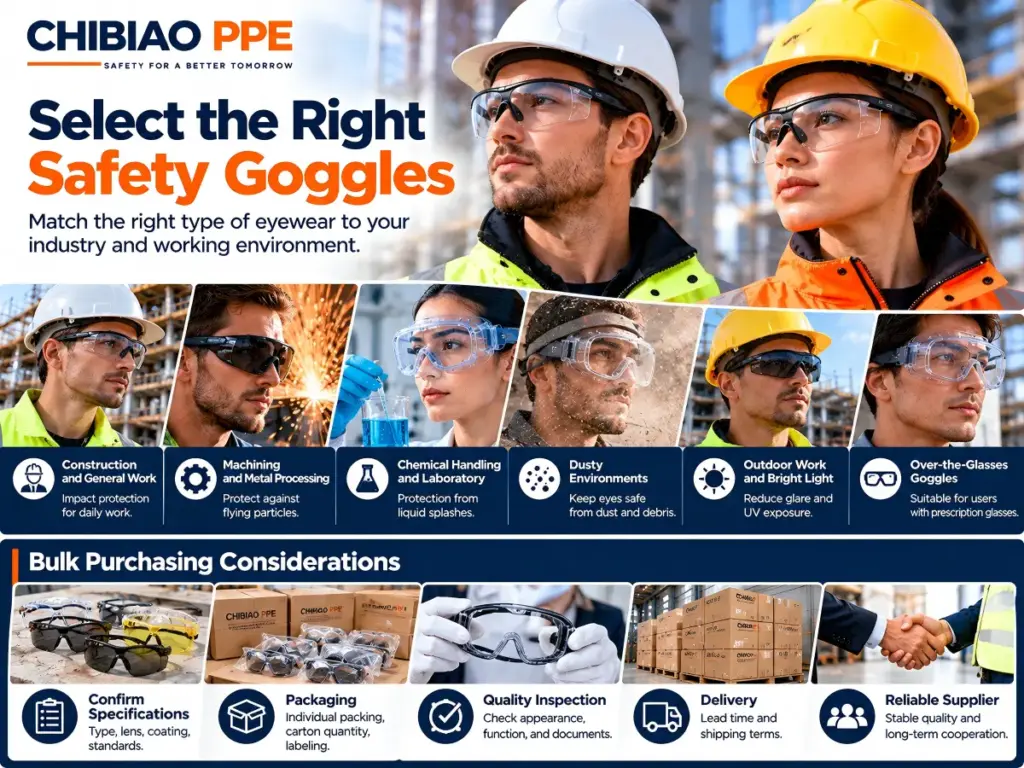
Use this checklist before confirming an industrial protective eyewear order.
- Application: Identify the workplace tasks and eye hazards.
- Product Type: Confirm whether safety glasses, goggles, or over-the-glasses designs are required.
- Protection: Specify the required impact, dust, splash, or other protective performance.
- Lens: Confirm lens material, color, optical clarity, and coating requirements.
- Fit: Evaluate coverage, comfort, adjustability, and compatibility with other PPE.
- Standards: Verify applicable standards and destination-market requirements.
- Documentation: Check prod